
100 Days Mission clock · Bundibugyo ebolavirus
Day 100
PHEIC declared 17 May 2026Day 100 reached 25 August 2026
Today marks Day 100 since WHO declared the Ebola outbreak caused by Bundibugyo virus (BDBV) in the Democratic Republic of Congo and Uganda a public health emergency of international concern (PHEIC) on 17 May 2026. Africa CDC declared a Public Health Emergency of Continental Security (PHECS) the following day. This update provides a review of progress achieved in diagnostic, therapeutic, and vaccine (DTV) availability over the past 100 days.
This analysis supports ongoing work by 100 Days Mission partners and has been developed in consultation with implementing organisations. These updates are intended to support the work of partners and key initiatives. While our regular 15-day reporting cycle concludes with this review, we will continue to provide major updates when significant developments occur in the BDBV response.
Accompanying this update is an article written by IPPS Chair Dr Mona Nemer and Head of Division for Laboratory Systems at Africa CDC Dr Yenew Kebede Tebeje. It reflects on the speed of the response over the past 100 days, the gaps that remain, and what sustained investment between outbreaks would take to close them.
As IPPS’s own mandate draws to a close at the end of February 2027, the 100 Days Mission continues. The Emergency Response Framework (ERF) that underpins this tracker will begin a phased transition of its medical countermeasure tracking function to a successor mechanism within the wider emergency response community, with details to be confirmed in a forthcoming statement. We will continue this tracking function throughout the transition period, ensuring continuity of data flows and stakeholder relationships.
- Key developments since Day 75
- Diagnostics
- Therapeutics
- Vaccines
- Cross-cutting
- Status of DTVs
- 100DM DTV timelines
- Future of the tracker
Key developments since Day 75
Diagnostics
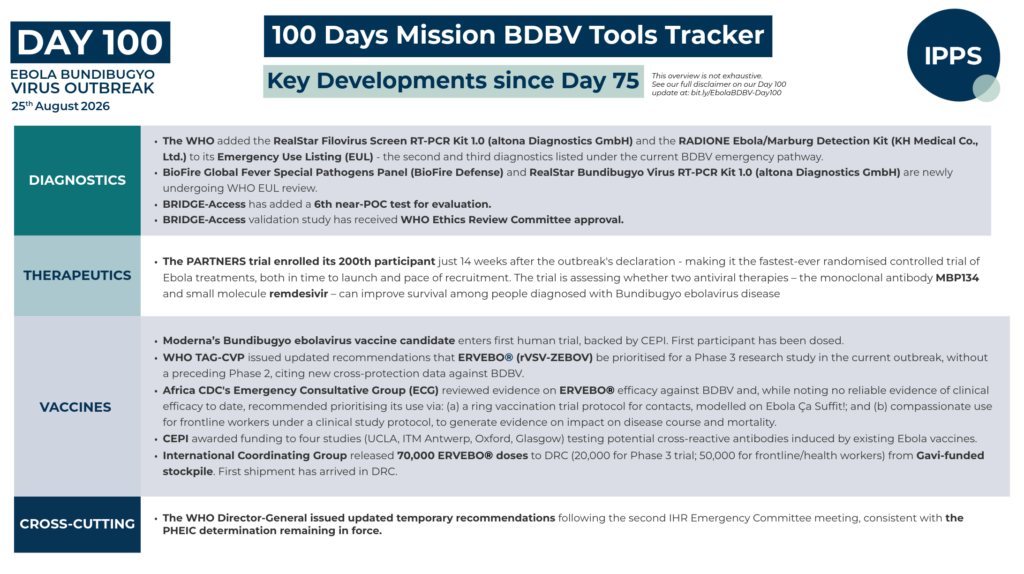
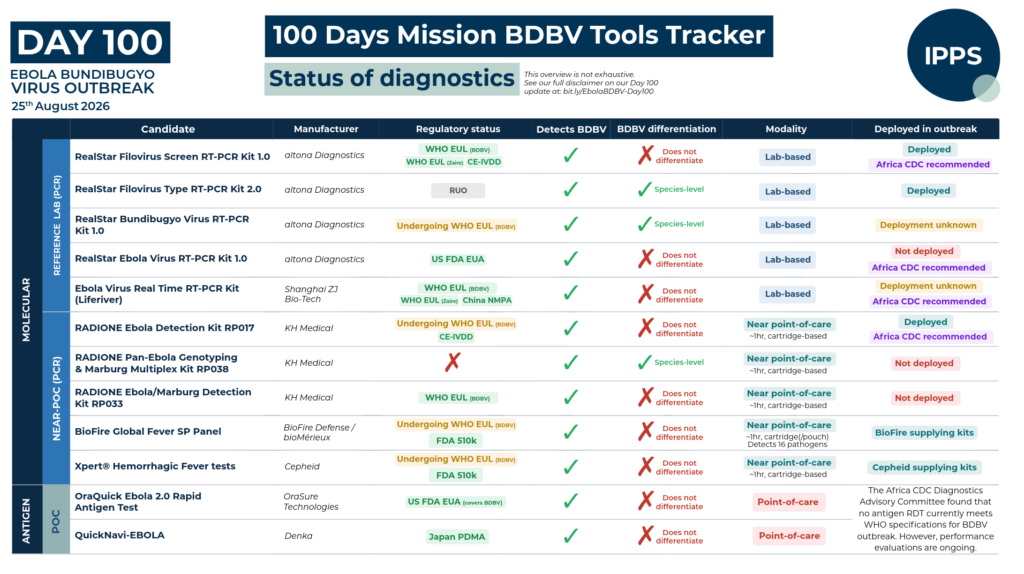
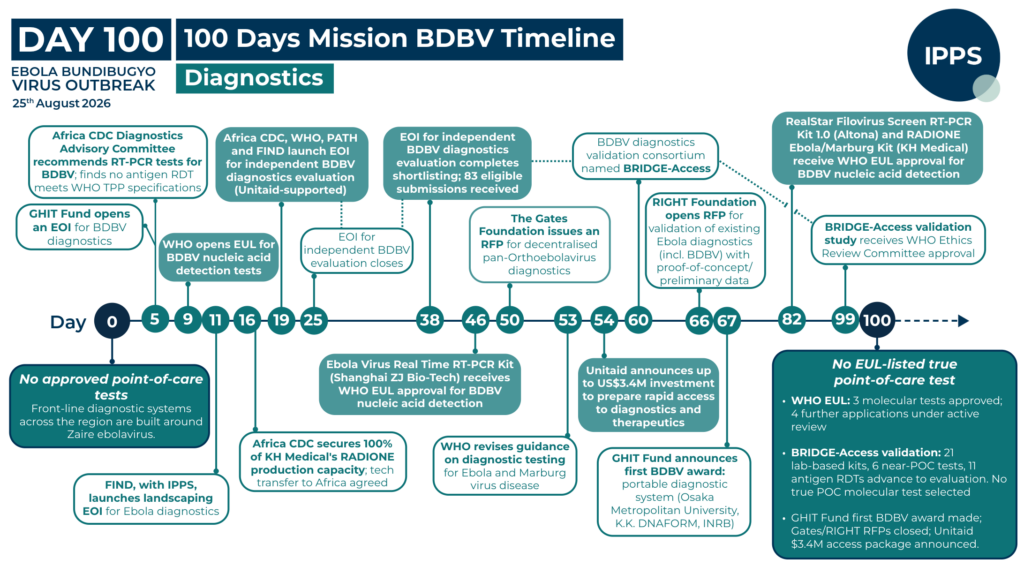
- The WHO added the RealStar Filovirus Screen RT-PCR Kit 1.0 (altona Diagnostics GmbH) and the RADIONE Ebola/Marburg Detection Kit (KH Medical Co., Ltd.) to its Emergency Use Listing (EUL) – the second and third diagnostics listed under the current BDBV emergency pathway.
- BioFire Global Fever Special Pathogens Panel (BioFire Defense) and RealStar Bundibugyo Virus RT-PCR Kit 1.0 (altona Diagnostics GmbH) are newly undergoing WHO EUL review.
- BRIDGE-Access has added a 6th near-POC test for evaluation.
- BRIDGE-Access validation study has received WHO Ethics Review Committee approval.
Therapeutics
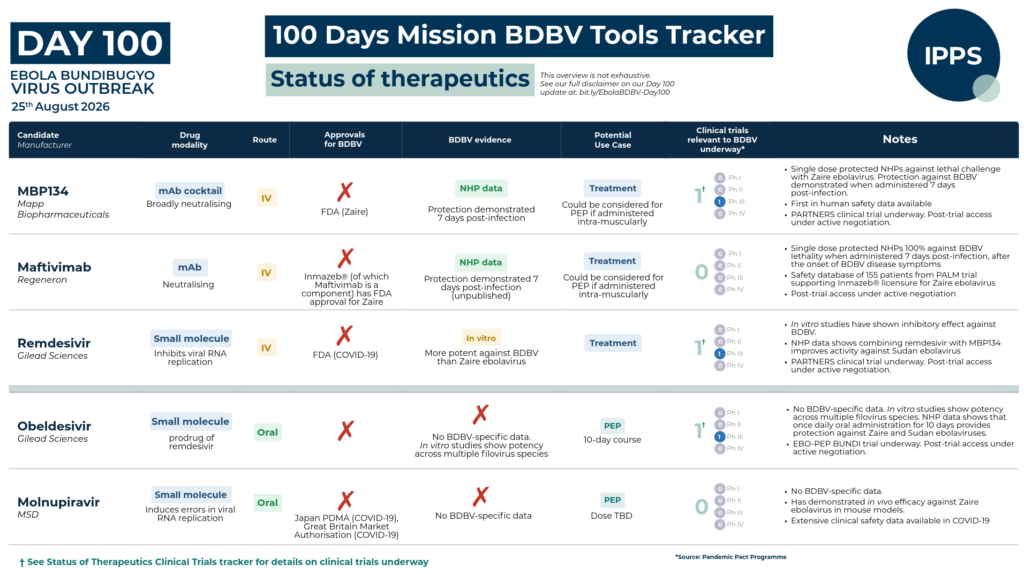
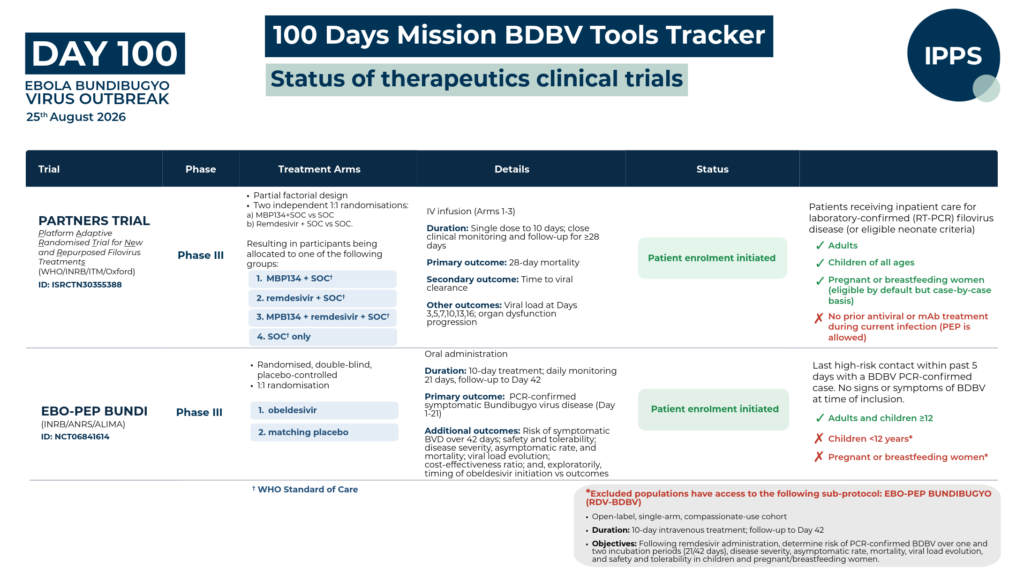
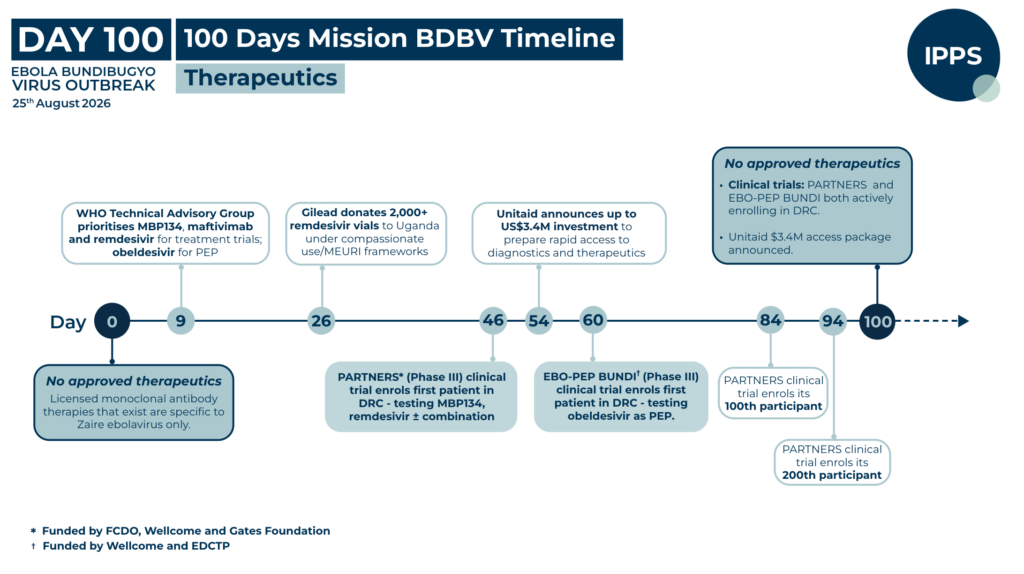
- The PARTNERS trial enrolled its 200th participant just 14 weeks after the outbreak was declared – it is the fastest-ever randomised controlled trial of Ebola treatments, both in time to launch and pace of recruitment. The trial is assessing whether two antiviral therapies – the monoclonal antibody MBP134 and small molecule remdesivir – can improve survival among people diagnosed with Bundibugyo ebolavirus disease.
Vaccines
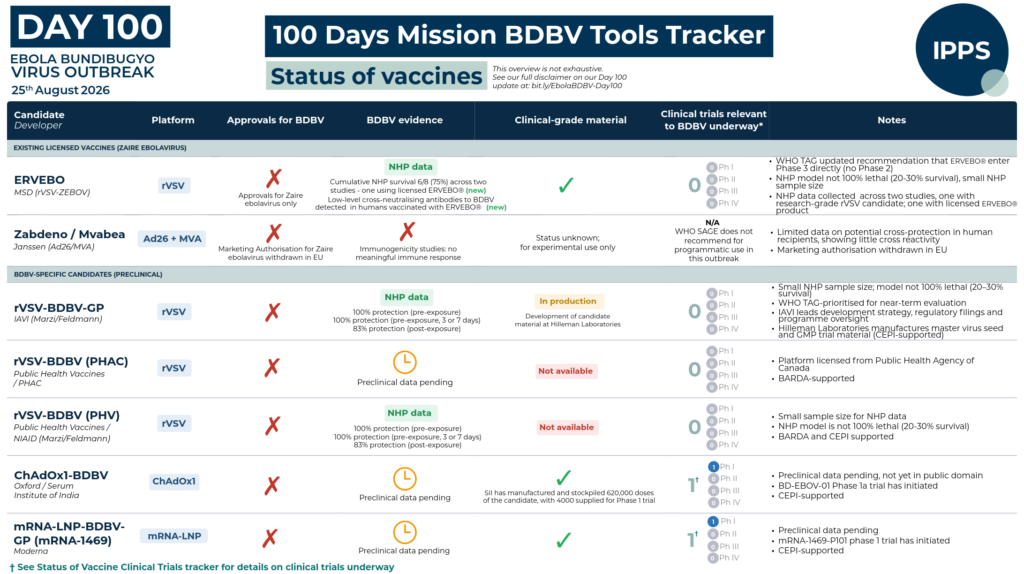
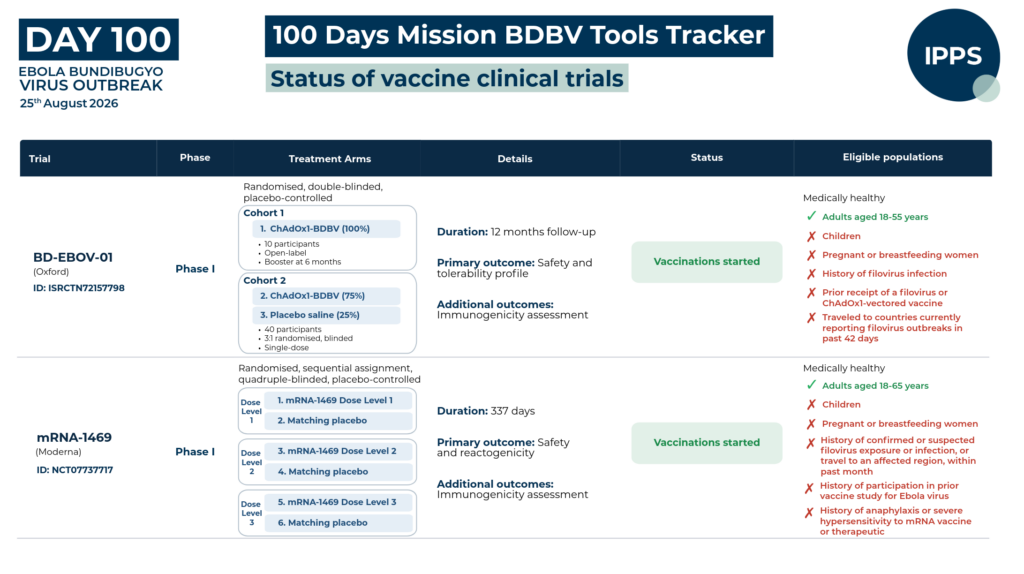
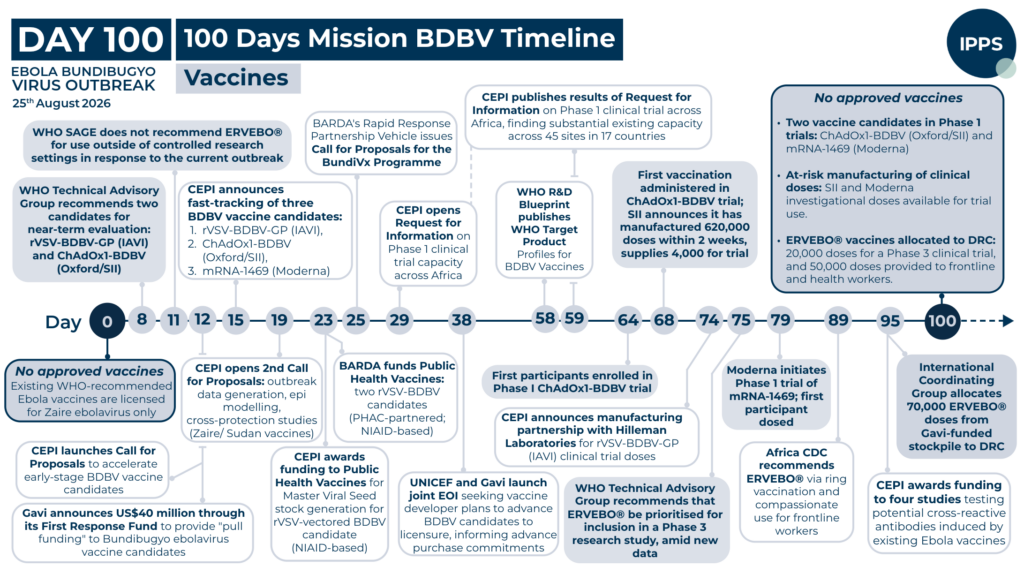
- Moderna’s mRNA-1469 Bundibugyo ebolavirus vaccine candidate entered its first human trial, backed by CEPI, with the first participants dosed on 4 August at three sites in Canada.
- Following its third meeting on 31 July, WHO’s Technical Advisory Group on Candidate Vaccine Prioritization (TAG-CVP) recommended that ERVEBO® (rVSV-ZEBOV) be prioritised for a Phase 3 trial in the current outbreak, reversing its earlier May position after new data pointed to possible cross-protection against BDBV.
- Africa CDC’s Emergency Consultative Group (ECG) reviewed evidence on ERVEBO® efficacy against BDBV (14 August) and, while noting no reliable evidence of clinical efficacy to date, recommended prioritising its use via: (a) a ring vaccination trial protocol for contacts, modelled on Ebola Ça Suffit!; and (b) compassionate use for frontline workers under a clinical study protocol, to generate evidence on impact on disease course and mortality.
- CEPI awarded funding to four studies (UCLA, ITM Antwerp, Oxford, Glasgow) testing potential cross-reactive antibodies induced by existing Ebola vaccines.
- International Coordinating Group released 70,000 ERVEBO® doses to DRC (20,000 for Phase 3 trial; 50,000 for frontline/health workers) from Gavi funded stockpile. First shipment has arrived in DRC.
Note: ERVEBO® is licensed and WHO-prequalified only for prevention of disease caused by Zaire ebolavirus, and is approved in more than 40 markets on that basis. MSD holds no safety or efficacy data on its use against Bundibugyo virus. The decision to deploy ERVEBO® off-label for BDBV is taken independently by relevant health authorities.
Cross-cutting
- The WHO Director-General issued updated temporary recommendations following the second IHR Emergency Committee meeting (18 August 2026), consistent with the PHEIC determination remaining in force.
Status of DTVs
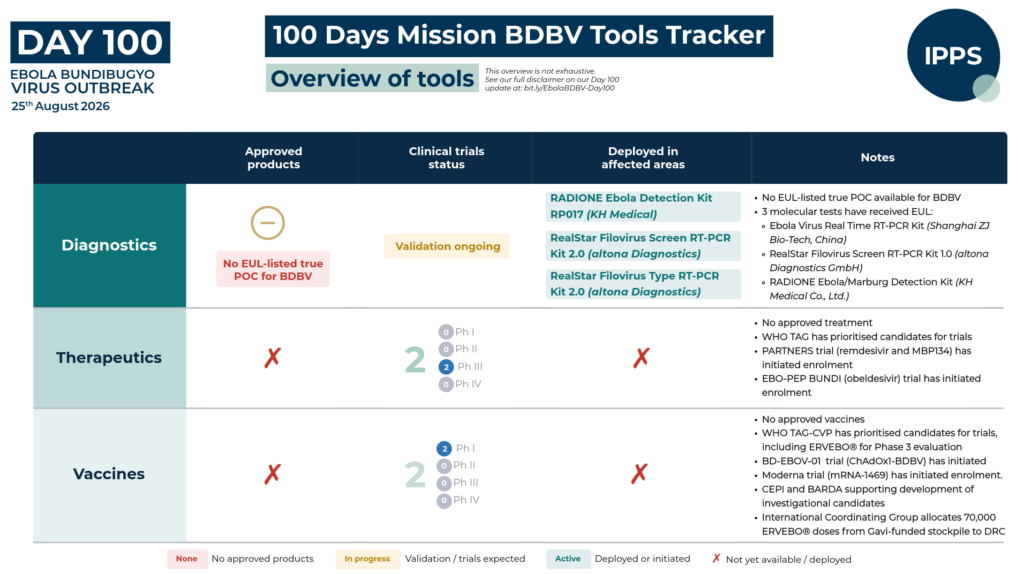
The medical countermeasures outlined in this section are not an exhaustive inventory of all products in development globally. Rather, they represent the candidates currently identified as leads for the response – those assessed by WHO TAG, actively discussed in partner coordination meetings, recommended for use by Africa CDC, and currently deployed or under evaluation. As new products emerge and existing candidates progress through development and evaluation, this landscape will continue to evolve.
100DM DTV timelines
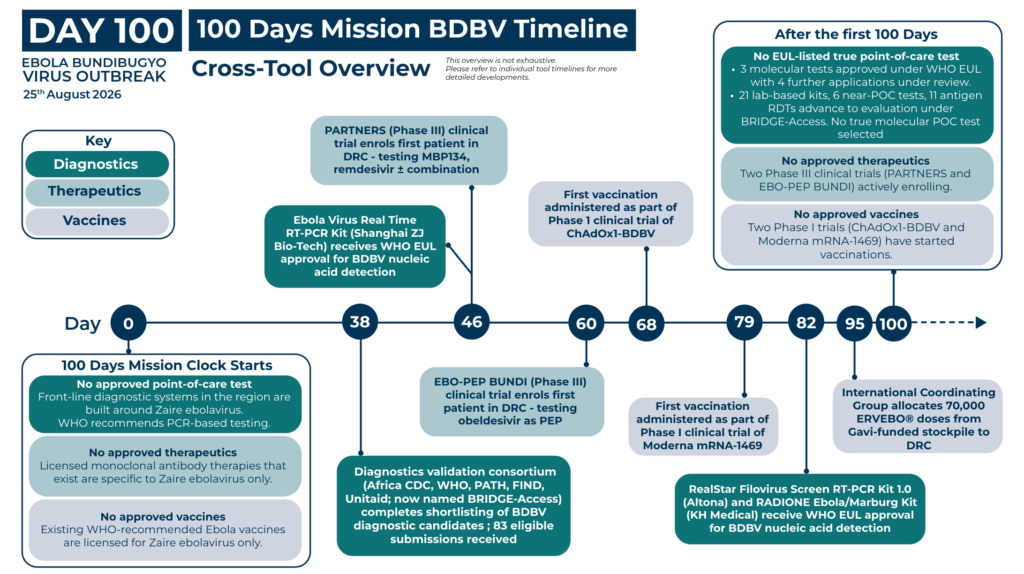
The timelines below summarise progress across the DTV pipeline over the past 100 days:
Future of the 100DM tracker
Today marks Day 100 of tracking under the Emergency Response Framework (ERF), established to monitor global readiness of diagnostic, therapeutic, and vaccine countermeasures against BDBV, and it brings our regular 15-day reporting cycle to a close.
Over this period, the ERF has brought the response community together around a shared, consistently updated picture of progress – made possible only through the sustained contribution of the wider community. Our thanks go to the researchers, manufacturers, regulators, and coordinating partners who have supplied the data, expertise, and time needed to keep the tracker accurate and useful across 100 days of reporting.
This tracking function will continue beyond the conclusion of IPPS’s own mandate. The ERF will begin a phased transition of its medical countermeasure tracking role to a successor mechanism within the wider emergency response community, with details to be set out in a forthcoming statement and announced at the i-MCM-Net meeting in Seoul.
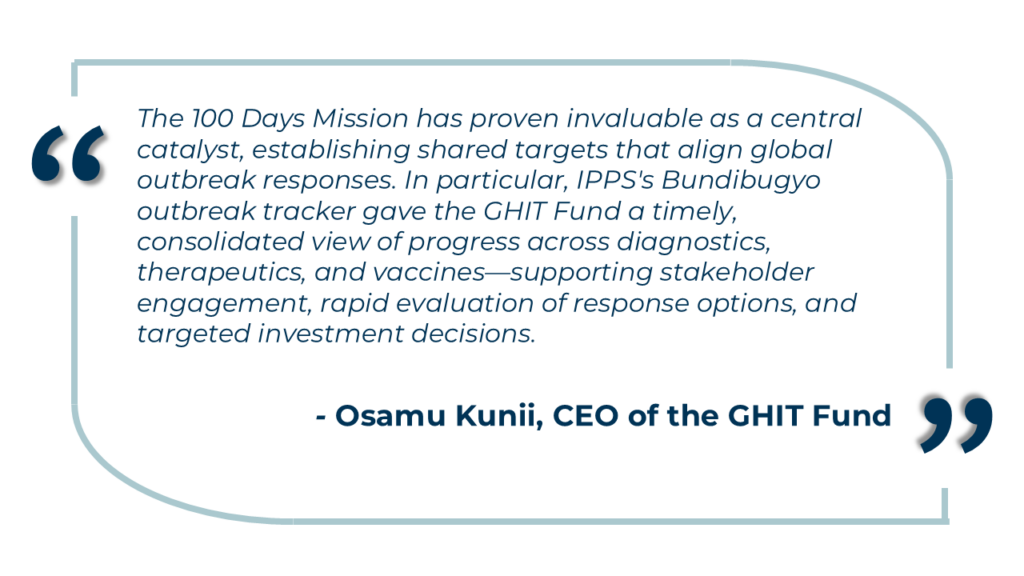
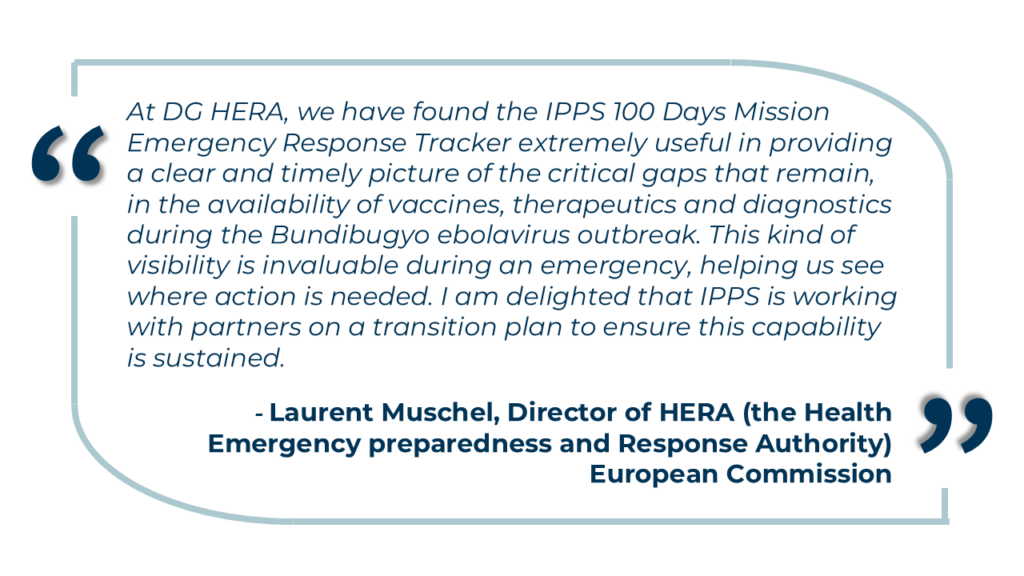
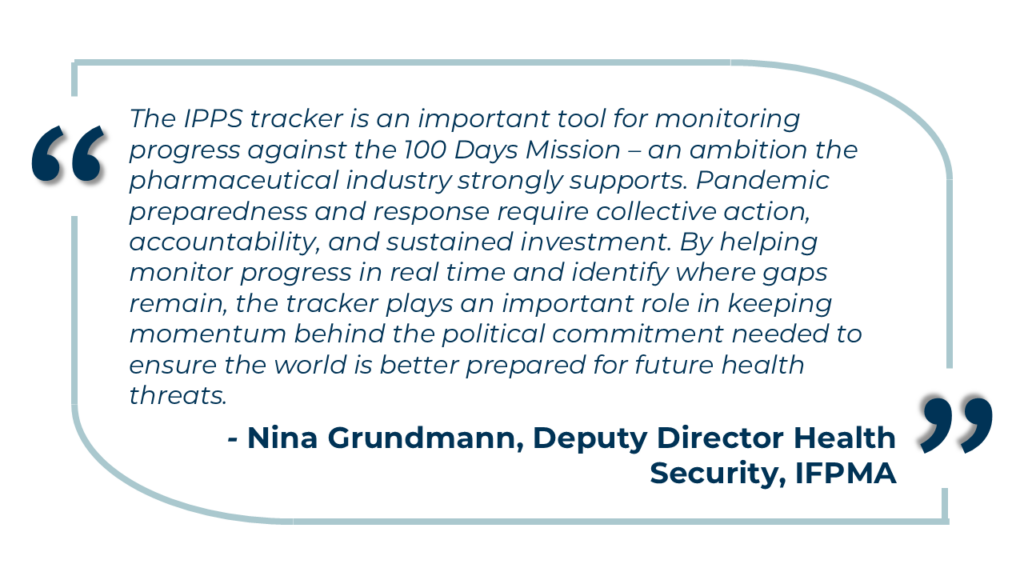
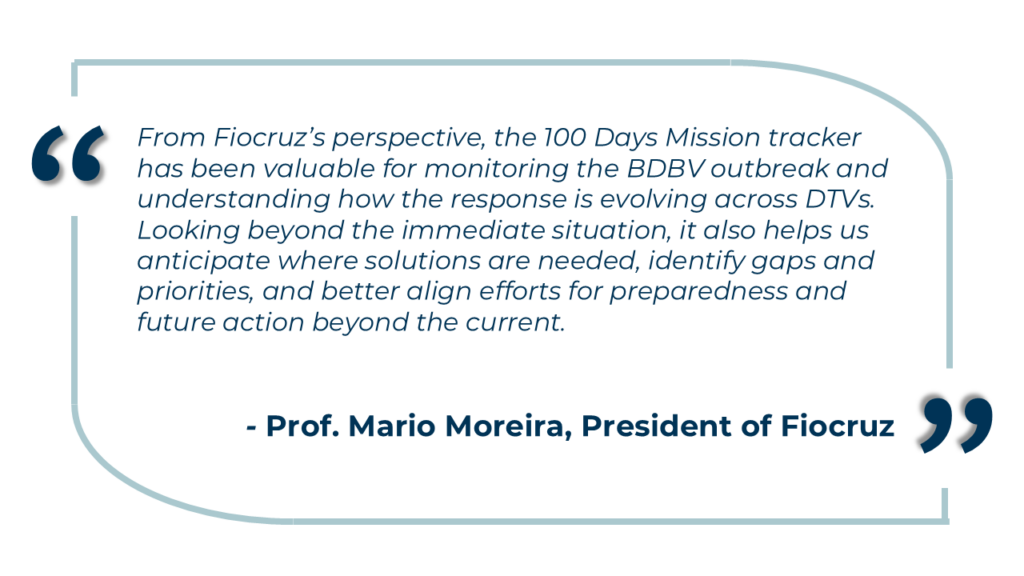
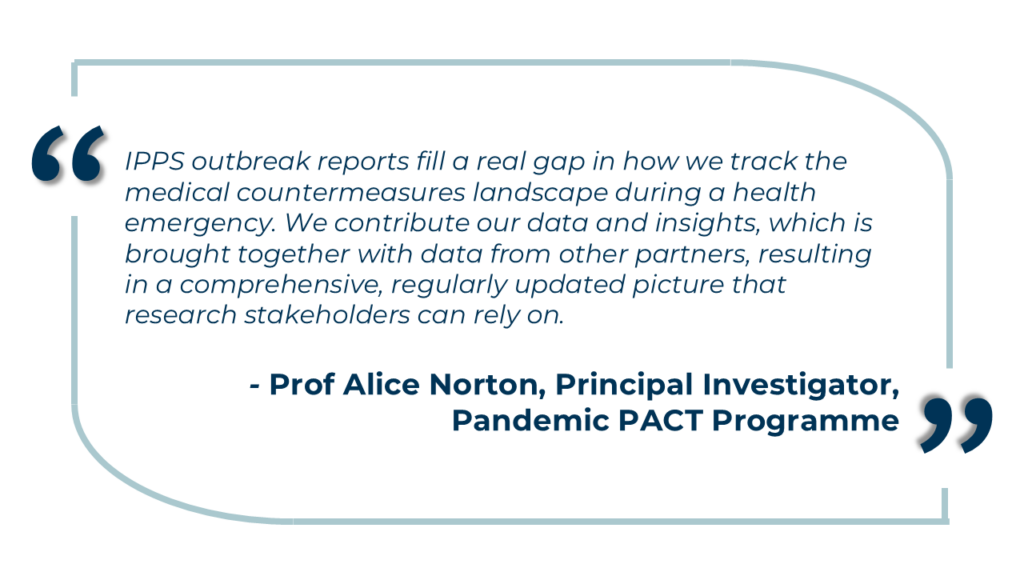
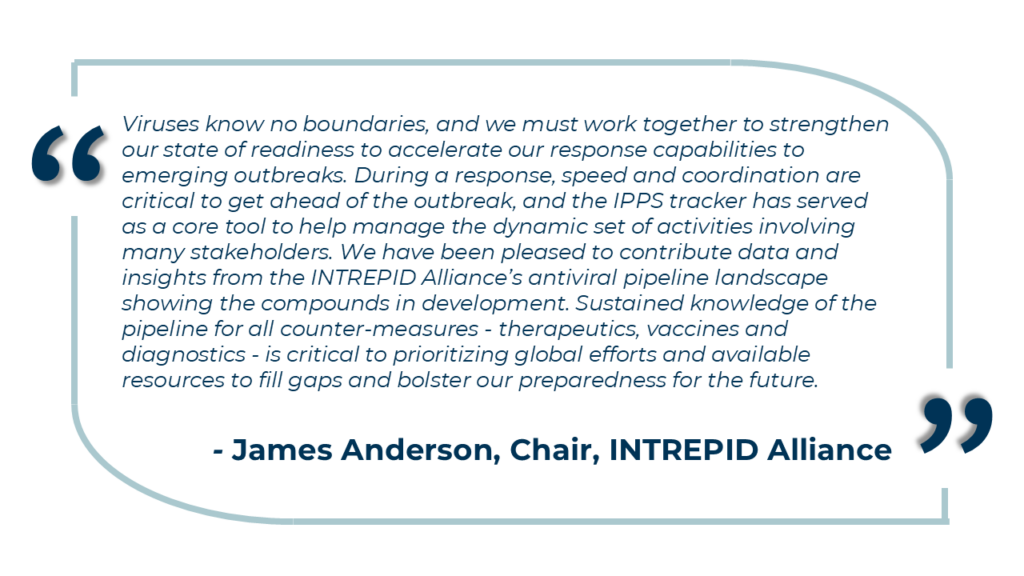
In the meantime, we remain grateful to our partners for their continued engagement, and share below several of their reflections on the value the tracker has brought to their work over these 100 days (click/tap to expand):
Acknowledgements
We are grateful to Africa CDC, Airfinity, ANRS MIE, Cepheid, CEPI, FIND, Gavi, Gilead, HUG, IAVI, IFPMA, i-MCM-Net Secretariat, Institut Mérieux, Intrepid Alliance, MSD, NDM Oxford, Pandemic Pact Programme, PANTHER Health, PATH, Regeneron, Roche, Unitaid, Wellcome, and WHO for providing data, verification, and critical feedback to this tracker.
If you have any corrections, please contact us at info@ippsecretariat.org.
Disclaimer for the Ebola Bundibugyo MCM Tools Tracker
Data shown in the tracker is not exhaustive. It prioritises candidates assessed by WHO TAG, actively discussed in partner coordination meetings and working groups, recommended by Africa CDC, and currently deployed or under evaluation.